Hand Nailed Roofing vs Nail Gun: The Ultimate Comparison
Hand Nailed Roofing vs Nail Gun: Which is Better? Compare hand nailed vs nail gun roofing for your next roofing project.
Key Highlights
- Hand nailing and nail guns are both commonly used techniques in the roofing industry.
- Hand nailing offers benefits such as quality workmanship, durability, and attention to detail.
- Nail guns are known for their efficiency, speed of installation, and cost-effectiveness.
- Proper nail placement is crucial in both techniques to ensure the longevity of the roof.
- Factors like roofing materials and installation techniques can also influence the lifespan of a roof.
- Safety measures should be taken regardless of the technique used.
Introduction
Roofing is an essential part of any building's structure, protecting it from the elements and ensuring its longevity. When it comes to roofing, one crucial aspect is nailing down the shingles or other roofing materials properly. Traditionally, hand nailing has been the go-to method for roofing contractors, but in recent years, nail guns have gained popularity for their efficiency and speed, especially with the use of premium shingles like Owens Corning TruDefinition Duration with SureNail Technology. This blog aims to explore the differences between hand nailing and nail gun techniques in roofing and determine which one is better for a new roof installation or roof replacement, specifically for roof restoration projects using high-quality materials like slate.
Before diving into the specifics, it's important to note that no matter which method is used, proper nail placement is crucial for the longevity of the roof. Roofing companies and contractors understand the importance of this and strive to provide quality workmanship and customer service.
Understanding the Basics of Roof Nailing
Proper nail placement is a fundamental aspect of roofing installation, regardless of whether hand nailing or nail guns are used. Roofing companies and contractors are well-versed in the importance of placing nails in the right position to ensure the integrity and longevity of the roof.
Commercial roofing and residential roofing projects both require precise nail placement to prevent leaks, wind damage, and other potential issues. Roofing solutions involve using the right materials and techniques to provide a durable and reliable roof.
When it comes to hand nailing, experienced roofers meticulously drive each nail into the shingle or roofing material by hand. This technique allows for greater control and attention to detail. Roofing companies that specialize in hand nailing take pride in their craftsmanship and the quality of their work.
On the other hand, nail guns offer a more efficient and time-saving approach to roof installation. These tools use compressed air or electricity to drive nails quickly into the roofing material. Roofing contractors who use nail guns can complete projects faster and with less effort, ultimately saving time and labor costs. However, it is important to note that not all installers are experienced or certified for the use of nail guns, such as those certified by GAF, which can lead to potential issues with the quality of the installation.
The Importance of Proper Nail Placement
Proper nail placement plays a crucial role in the overall integrity of a roof. Roof inspections often include checking for proper nail placement to ensure that the shingles are securely fastened. This is especially important in areas prone to high winds and storms, as improper nail placement can lead to shingle blow-offs and subsequent roof damage.
Insurance companies also take nail placement into account when assessing roof damage claims, including damage from hail storms. If it is determined that the nails were not properly placed, it may affect the coverage provided for hail damage. Therefore, it is essential for roofing contractors to adhere to industry standards and guidelines for proper nail placement to avoid any issues down the line.
Types of Nails Used in Roofing
Different types of nails are used in roofing, depending on the type of roofing material being installed. For residential roofing projects, the most common type of nail used is the roofing nail. These nails are specifically designed to withstand the elements and provide a secure hold for shingles.
Metal roofing, on the other hand, requires specialized metal roofing nails. These nails are typically made of galvanized steel or stainless steel to prevent corrosion.
Shingles, whether they are asphalt or wood, require nails with a large head to securely hold the shingle in place. These nails are often referred to as roofing nails or shingle nails.
It is important for roofing contractors to use the appropriate nails for each type of roofing material to ensure proper installation and longevity of the roof.
The Traditional Hand Nailing Technique
Hand nailing has been the traditional technique used in roofing for many years. It requires skilled roofers who have years of experience and a keen eye for detail. Hand nailing offers certain advantages that make it a preferred choice for some roofing companies and contractors.
One of the main advantages of hand nailing is the quality of workmanship it offers. Roofers who hand nail take pride in their craftsmanship and ensure that each nail is driven in with precision. This attention to detail results in a durable and aesthetically pleasing roof.
Advantages of Hand Nailing Shingles
Hand nailing shingles offers several advantages over other roofing techniques. Here are some key benefits:
- Durability: Hand nailing ensures that each shingle is securely fastened, reducing the risk of shingle blow-offs during high winds or storms.
- Aesthetics: Hand nailing allows for greater control over the placement of each nail, resulting in a cleaner and more visually appealing roof.
- Longevity: Properly hand nailed shingles have a longer lifespan compared to those installed using other methods.
- Craftsmanship: Roofers who hand nail take pride in their work and strive to deliver exceptional quality, ensuring that the end result is a beautifully finished roof.
Hand nailing is often preferred for smaller roofing projects or when aesthetics and durability are of utmost importance.
Challenges of Hand Nailing
While hand nailing offers certain advantages, it also comes with its own set of challenges. Some of the drawbacks of hand nailing include:
- Time-consuming: Hand nailing is a labor-intensive process that requires more time compared to using nail guns. This can result in longer project timelines.
- Labor-intensive: Hand nailing requires physical effort and can be tiring for roofers, especially when working on larger roofs or in challenging weather conditions.
These challenges make hand nailing less feasible for larger roofing projects or situations where speed and efficiency are crucial.
The Rise of Nail Guns in Roofing
In recent years, the use of nail guns in roofing has gained popularity due to the efficiency and speed they offer. Nail guns are a result of advancements in technology, making the installation process faster and more streamlined.
Roofing contractors have embraced the use of nail guns for their ability to speed up project timelines and reduce labor costs. With nail guns, roofers can drive nails into the roofing material quickly and accurately, saving time and effort.
How Nail Guns Work
Nail guns are innovative tools that use compressed air or electricity to drive nails into the roofing material. They work by applying pressure to the nail, propelling it forward with enough force to penetrate the material.
One of the key advantages of nail guns is their speed of installation. These tools can drive nails much faster compared to hand nailing, significantly reducing project timelines. The efficiency of nail guns allows roofing contractors to complete more jobs in less time, ultimately saving on labor costs.
Nail guns have revolutionized the roofing industry by making the installation process more efficient and less labor-intensive.
Benefits of Using Nail Guns for Roofing
Using nail guns for roofing projects offers several benefits that make them a preferred choice for many roofing contractors:
- Efficiency: Nail guns allow for quick and accurate nail placement, reducing the overall installation time.
- Cost-effective: The efficiency of nail guns translates to reduced labor costs and faster project completion, ultimately saving money for both roofing companies and clients.
- Versatility: Nail guns can be used for various types of roofing materials, including shingles, metal roofing, and more.
- Increased productivity: Nail guns enable roofing contractors to complete more jobs in a shorter period, increasing their productivity and capacity to take on additional projects.
Using nail guns for roofing provides an efficient and cost-effective solution that benefits both roofing contractors and clients.
Comparing Durability and Longevity
When it comes to the durability and longevity of a roof, the installation technique used can have a significant impact. Both hand nailing and nail gun methods can result in durable roofs, but there are factors that need to be considered.
Roof repairs and replacements are major investments, and homeowners want to ensure that their roofs will last for many years. Warranties provided by roofing companies can offer peace of mind, but the installation technique also plays a role in the overall lifespan of the roof.
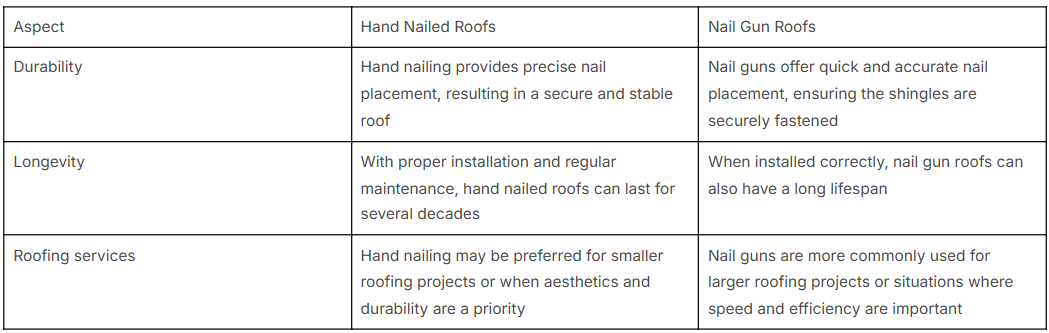
Hand Nailed Roofs vs. Nail Gun Roofs
Hand nailed roofs and nail gun roofs can both be durable and long-lasting when installed correctly. Here is a comparison of their durability and longevity:
Factors Influencing Roof Lifespan
While the installation technique used in roofing plays a role in the overall lifespan of a roof, there are other factors to consider as well. The choice of roofing materials and the installation techniques employed can significantly impact the longevity of the roof.
Different roofing materials have varying lifespans, with some lasting longer than others. For example, metal roofs are known for their durability and can last up to 50 years or more with proper maintenance. On the other hand, asphalt shingle roofs typically have a lifespan of 20 to 30 years.
The installation techniques used also influence the lifespan of the roof. Proper installation with attention to detail and adherence to industry standards ensures that the roof will perform optimally and have a longer lifespan.
Efficiency and Speed
Efficiency and speed are crucial factors to consider when it comes to roofing projects. The installation technique used can impact the overall efficiency and speed of the project, ultimately affecting customer satisfaction and completion timelines.
Roofing companies strive to provide efficient and timely services to their clients. This includes completing projects within the agreed-upon timelines and meeting customer expectations regarding project completion.
Time Considerations for Hand Nailing
Hand nailing is a time-consuming process that requires a certain level of craftsmanship and attention to detail. Roofers meticulously drive each nail into the roofing material by hand, ensuring proper placement and secure fastening.
The time required for hand nailing can vary depending on the size of the roofing project and the complexity of the roof design. It may take longer to hand nail a roof compared to using nail guns, but the attention to detail and quality of workmanship make it a preferred choice for certain roofing companies and contractors.
Speed of Installation with Nail Guns
Nail guns offer significant advantages in terms of speed and efficiency. These tools can drive nails into the roofing material quickly and accurately, reducing the overall installation time.
Roofing contractors who use nail guns can complete projects faster, allowing them to take on more jobs within a given project timeline. This efficiency benefits both roofing companies and clients, ensuring that projects are completed in a timely manner.
The speed of installation with nail guns also reduces labor costs, as less time and effort are required compared to hand nailing. This can result in cost savings for both roofing contractors and clients.
Cost Implications
Cost is an important consideration for any roofing project. The installation technique used can impact the overall cost and should be taken into account when comparing hand nailing and nail gun methods.
Roofing companies provide free estimates for potential roofing projects, allowing clients to assess the cost implications before making a decision. The insurance process for roof repairs or replacements may also factor into the overall cost, depending on the coverage provided.
Initial Investment for Tools and Equipment
The initial investment for tools and equipment is a consideration for both hand nailing and nail gun techniques. Hand nailing requires basic tools like hammers and nails, which are readily available and relatively inexpensive.
On the other hand, nail guns require a higher initial investment, as these tools can be more expensive. However, the efficiency and time savings provided by nail guns can result in long-term cost savings for roofing companies and clients.
Ultimately, the choice of technique should be based on a combination of factors, including the scope of the roofing project, budget considerations, and the desired level of quality work.
Labor Costs: Hand Nailing vs. Nail Gun
Labor costs are a significant factor in any roofing project. Hand nailing and nail gun techniques have different implications on labor costs.
Hand nailing requires more physical effort and can be more labor-intensive compared to using nail guns. This can result in higher labor costs, as more time and effort are required to complete the roofing project.
Nail guns, on the other hand, offer greater efficiency and speed of installation. This can reduce labor costs, as less time and effort are required to complete the project.
It is important for roofing companies and contractors to consider labor costs when determining the overall cost and feasibility of a roofing project.
Safety Concerns
Safety is of utmost importance in any roofing project. Both hand nailing and nail gun techniques have their own safety concerns that need to be addressed.
Roofing companies and contractors should have proper safety measures in place to ensure the well-being of their workers and prevent accidents. This includes providing safety training, appropriate protective gear, and ensuring compliance with industry standards and regulations.
Safety measures are essential not only for the well-being of the roofing professionals but also to mitigate potential liabilities and insurance claims.
Risks Associated with Hand Nailing
Hand nailing poses certain risks that need to be mitigated with proper safety measures. Some of the risks associated with hand nailing include:
- Hammer-related accidents: Hand nailing involves using hammers, which can lead to accidents if not handled properly.
- Nail-related injuries: Improper handling of nails can result in injuries, such as puncture wounds or lacerations.
- Falls and slips: Roofing professionals performing hand nailing work at height are at risk of falls and slips if not properly secured.
Roofing companies should prioritize safety training and ensure that their workers are equipped with the necessary knowledge and protective gear to mitigate these risks.
Safety Measures When Using Nail Guns
Nail guns also pose certain safety risks that need to be addressed through proper safety measures. Some of the safety measures when using nail guns include:
- Safety training: Roofing professionals should receive adequate training on how to safely operate nail guns and understand the potential risks involved.
- Maintenance and inspection: Regular maintenance and inspection of nail guns are necessary to ensure that they are in proper working condition and do not pose any safety hazards.
- Protective gear: Roofing contractors should provide their workers with appropriate protective gear, such as safety glasses and gloves.
Implementing these safety measures ensures the well-being of the roofing professionals and reduces the likelihood of accidents or injuries on the job site.
Conclusion
In conclusion, whether you opt for hand nailed roofing or nail gun technology, each method has its advantages and challenges to consider. Hand nailing offers precision and a personal touch, while nail guns provide efficiency and speed. The choice between the two ultimately depends on factors such as durability, longevity, efficiency, cost implications, and safety concerns. Understanding the nuances of each method will help you make an informed decision based on your specific roofing needs and preferences. Whichever method you choose, ensuring proper nail placement and adherence to safety measures is paramount for a successful roofing project.
Frequently Asked Questions
Can hand nailing ensure better roof quality?
Hand nailing can result in better roof quality due to the attention to detail and craftsmanship involved. Roofing companies that specialize in hand nailing take pride in delivering exceptional quality and ensuring customer satisfaction.
Are nail guns safe for roofing projects?
Nail guns can be safe for roofing projects when proper safety measures are in place. Roofing contractors should provide safety training and ensure that their workers follow industry standards and regulations to mitigate any potential risks.